Pintura y poesía

Pintura y poesía
Mostrando entradas con la etiqueta - Irlanda. Mostrar todas las entradas

lunes, 24 de julio de 2017

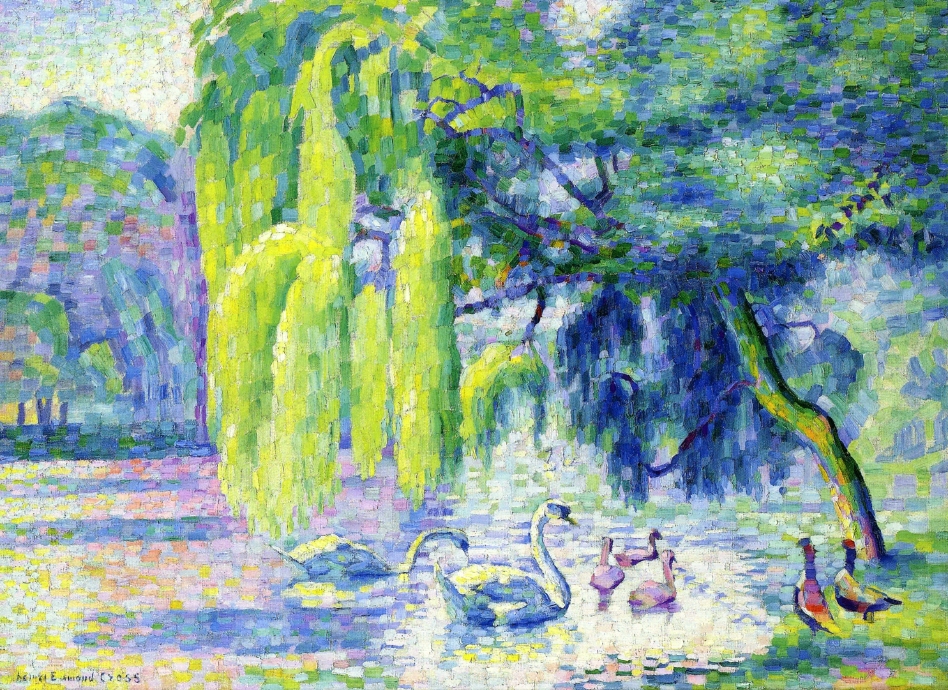
William Butler Yeats. The Wild Swans at Coole (Los cisnes salvajes de Coole).

Familia de cisnes (1899/1900)
Henri-Edmond Cross (Francia, 1856 - 1910)
Óleo sobre lienzo
Colección privada

The trees are in their autumn beauty, 
The woodland paths are dry, 
Under the October twilight the water 
Mirrors a still sky; 
Upon the brimming water among the stones 
Are nine-and-fifty swans. 

The nineteenth autumn has come upon me 
Since I first made my count; 
I saw, before I had well finished, 
All suddenly mount 
And scatter wheeling in great broken rings 
Upon their clamorous wings. 

I have looked upon those brilliant creatures, 
And now my heart is sore. 
All's changed since I, hearing at twilight, 
The first time on this shore, 
The bell-beat of their wings above my head, 
Trod with a lighter tread. 

Unwearied still, lover by lover, 
They paddle in the cold 
Companionable streams or climb the air; 
Their hearts have not grown old; 
Passion or conquest, wander where they will, 
Attend upon them still. 

But now they drift on the still water, 
Mysterious, beautiful; 
Among what rushes will they build, 
By what lake's edge or pool 
Delight men's eyes when I awake some day 
To find they have flown away? 


Los árboles están en plena belleza otoñal,
y los senderos del bosque están secos,
en el crepúsculo de octubre el agua
refleja un cielo quieto;
sobre el agua que desborda las piedras
hay cincuenta y nueve cisnes.

Diecinueve otoños me cayeron encima
desde la primera vez que los contara;
y vi, mucho antes de haber terminado
que todos de repente vuelo alzaban
dispersándose en grandes anillos rotos
en revuelo de alas clamorosas.

Yo apreciaba esas criaturas brillantes
y hoy mi corazón está dolido.
Todo cambió desde que, al oír en el ocaso,
por primera vez en esta costa
sobre mi cabeza el tañer de sus alas
con paso más ligero caminara.

Frescos aún, amante con amante,
chapotean en las frías
y afables corrientes o por el aire ascienden.
Sus corazones no han envejecido;
vagan a su antojo, pues pasión o conquista
aún los esperan.

Flotan ahora sobre el agua tranquila,
misteriosos y bellos.
¿Entre qué juncos se asentarán,
al borde de cuál lago o estanque
deleitarán los ojos de los hombres
cuando despierte yo algún día
para descubrir que se han volado?

Traducción: Delia Pasini

William Butler Yeats (Irlanda, 1865 – 1939).
miércoles, 2 de noviembre de 2016

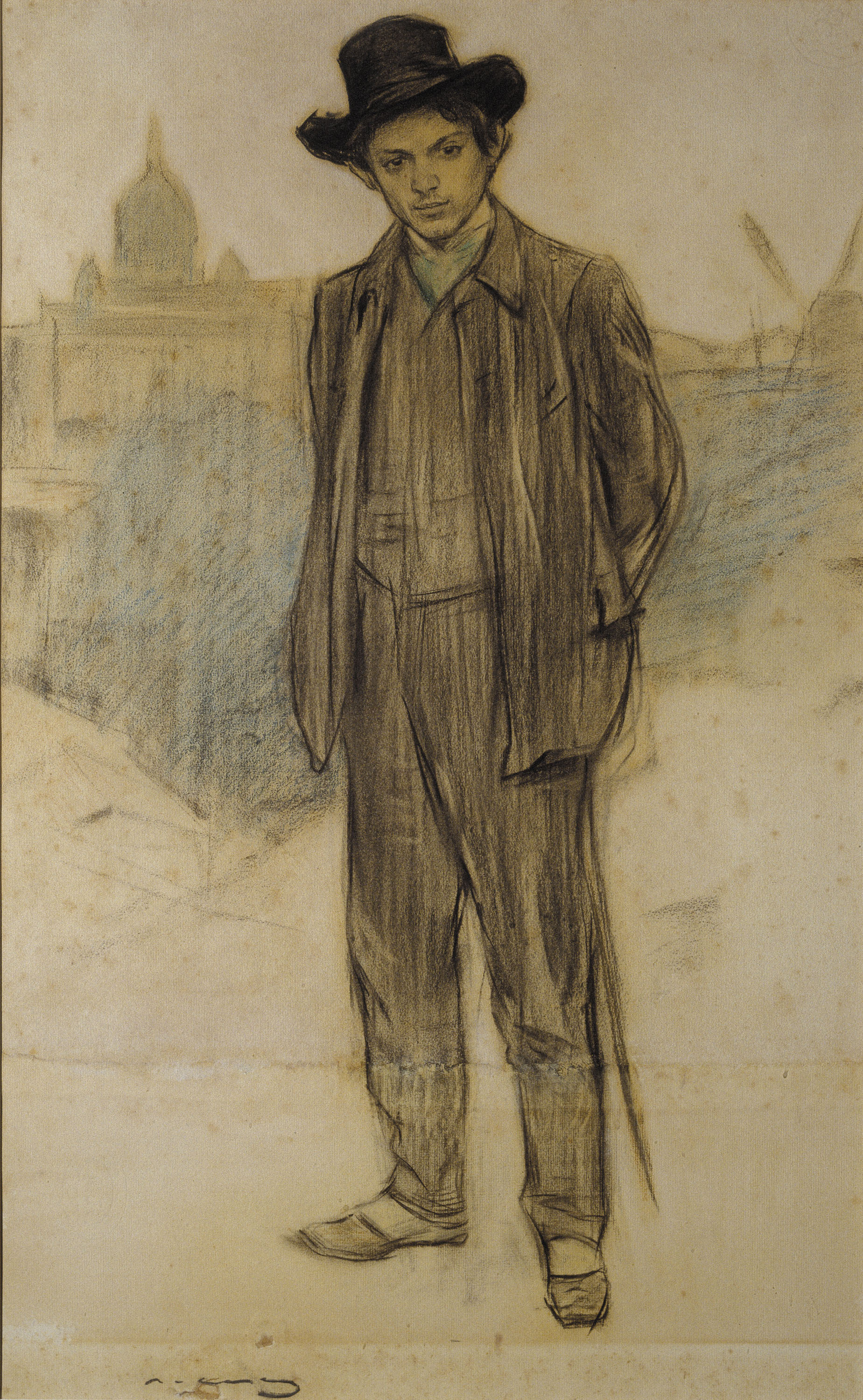
Patrick Kavanagh. I had a future (Tuve un futuro).

Retrato de Pablo Picasso (1900)
Ramón Casas y Carbó (1866 - 1932)
Carboncillo y pastel sobre papel
Museo Nacional de Arte de Cataluña (MNAC), Barcelona, España.

O I had a future
A future

Gods of the imagination bring back to life
The personality of those streets,
Not any streets
But the streets of nineteen forty.

Give the quarter-seeing eyes I looked out of
The animal-remembering mind
The fog through which I walked towards
      The mirage
That was my future.

The women I was to meet
They were nowhere within sight.

And then the pathos of the blind soul,
How without knowing stands in its own kingdom.
Bring me a small detail
How I felt about money,
Not frantic as later,
There was the future.

Show me the stretcher-bed I slept on
In a room on Drumcondra Road,
Let John Betjeman call for me in a car.

It is summer and the eerie beat
of madness in Europe trembles the
Wings of the butterflies along the canal.

O I had a future.


Tuve un futuro

Tuve un futuro,
un futuro.

Dioses de la imaginación, revivid
la personalidad de aquellas calles,
no unas calles cualesquiera,
sino las calles de mil novecientos cuarenta.

Dadme los ojos miopes con los que miraba,
la mente con memoria de animal,
la niebla que iba atravesando hasta el espejismo
que era mi futuro.

Las mujeres que debía encontrar
no estaban a la vista.

Y después el dolor del alma ciega
que sin saberlo está en su propio reino.

Dadme algún detalle
de cómo sentía el dinero,
sin la ansiedad posterior,
había futuro.

Mostradme la cama plegable donde dormía
en un cuarto de Drumcondra Road.
Que John Betjeman pase a buscarme en coche.

Es verano y el redoble oscuro
de la locura en Europa agita las alas
de las mariposas sobre el canal.

Tuve un futuro.

 Traducción: Fruela Fernández

Patrick Kavanagh (Irlanda, 1904 – 1967).

martes, 12 de julio de 2016

Patrick Kavanagh. Innocence (Inocencia).

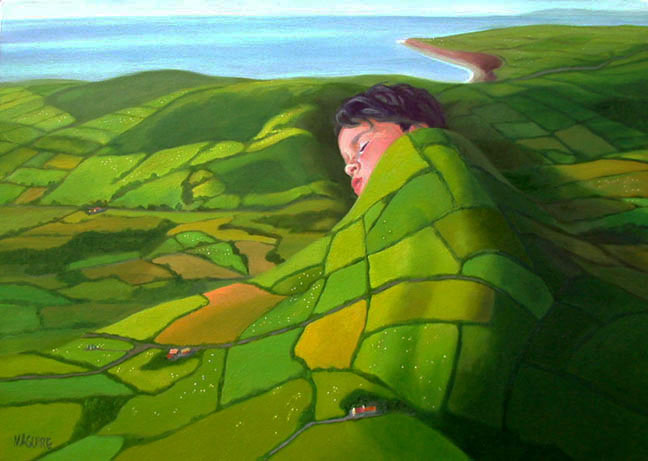
La colcha de Patrick
Barrie Maguire
Óleo sobre lienzo
Irlanda

Innocence

 
They laughed at one I loved -
The triangular hill that hung
Under the Big Forth. They said
That I was bounded by the whitethorn hedges
Of the little farm and did not know the world. 
But I knew that love's doorway to life
Is the same doorway everywhere. 
 
Ashamed of what I loved
I flung her from me and called her a ditch
Although she was smiling at me with violets.
 
But now I am back in her briary arms;
The dew of an Indian Summer morning lies
On bleached potato-stalks -
What age am I?
 
I do not know what age I am,
I am no mortal age;
I know nothing of women,
Nothing of cities,
I cannot die
Unless I walk outside these whitethorn hedges.
 

Inocencia

Se rieron de mi amada…
la colina triangular que pendía
bajo Big Forth. Dijeron
que estaba encadenado a los setos de espino
de la vieja granja y no conocía el mundo.
Pero yo sabía que la puerta del amor a la vida
es la misma puerta en todas partes.

Avergonzado de la que amaba,
la arrojé de mí y la llamé zanja,
aunque me sonreía con violetas.

Pero ahora he vuelto a sus brazos de brezo;
el rocío de San Martín cubre
los tallos blanqueados de las patas.
¿Qué edad tengo?

No sé mi edad,
no tengo edad mortal.
Nada sé de mujeres,
nada sé de ciudades,
no puedo morir
si no salgo de estos setos de espino.


Traducción: Fruela Fernández

Patrick Kavanagh (Irlanda, 1904 – 1967)

jueves, 7 de abril de 2016

Patrick Kavanagh. Poplar Memory (Recuerdo de los chopos).

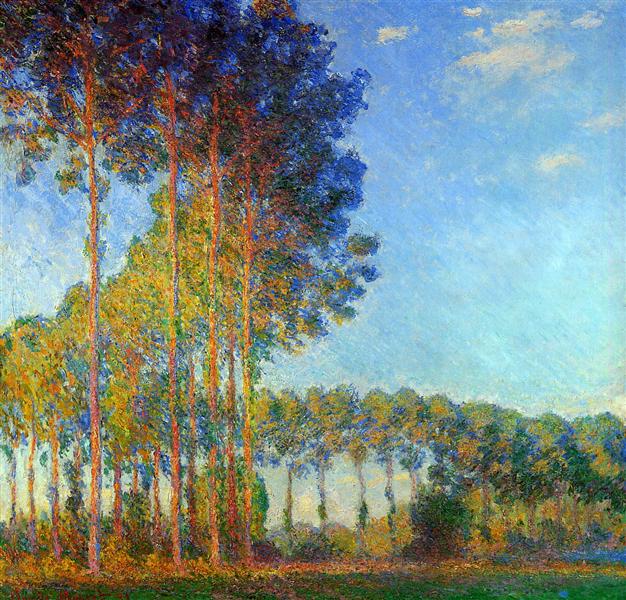
Álamos en los bancos del río Epte, vistos desde el pantano. (1891 - 92)
Claude Monet (Francia, 1840 - 1926)
Colección privada

Poplar Memory

I walked under the autumned poplars that my father planted
On a day in April when I was a child
Running beside the heap of suckers
From which he picked the straightest, most promising.

My father dreamt forests, he is dead --
And there are poplar forests in the waste-places
And on the banks of drains.

When I look up
I see my father
Peering through the branched sky.


Recuerdo de los chopos

Caminaba entre los chopos otoñados que mi padre plantó
una tarde de abril cuando yo era un niño 
que corría entre hileras de renuevos,
y él tomaba los tenaces, los prometedores.

Mi padre soñó bosques, está muerto;
y hay chopos en eriales
y a la orilla de acequias.

Cuando miro hacia arriba
veo a mi padre
asomarse por el cielo enramado.


Traducción: Fruela Fernández

Patrick Kavanagh (Irlanda, 1904 – 1967).

lunes, 25 de enero de 2016

Paul Durcan. Felicity in Turin (Felicidad en Turín).

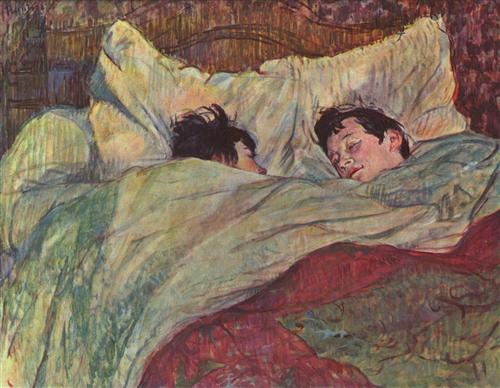
En la cama
Henri de Tolouse-Lautrec
Óleo sobre cartulina
Museo de Orsay, París, Francia.


Felicity in Turin

We met in the Valentino in Turin
And travelled through Italy by train,
Sleeping together.
I do not mean having sex.
I mean sleeping together.
Of which sexuality is,
And is not, a part.

It is this sleeping together
That is sacred to me.
This yawning together.
You can have sex with anyone
But with whom can you sleep ?

I hate you
Because having slept with me
You left me.
Felicidad en Turín

Nos encontramos en el Valentino en Turín
Y viajamos a través de Italia por tren
Para dormir juntos,
No quiero decir tener sexo
Quiero decir dormir juntos.
De lo cual la sexualidad es
Y no es, una parte.

Este dormir juntos
Es sagrado para mí
Este bostezar juntos
Tú puedes tener sexo con cualquiera
¿Pero con quién puedes dormir?

Te odio
Porque habiendo dormido conmigo
Me dejaste.


 Paul Durcan (Irlanda, 1944)

lunes, 18 de enero de 2016

Patrick Kavanagh. Epic (Epopeya).

 
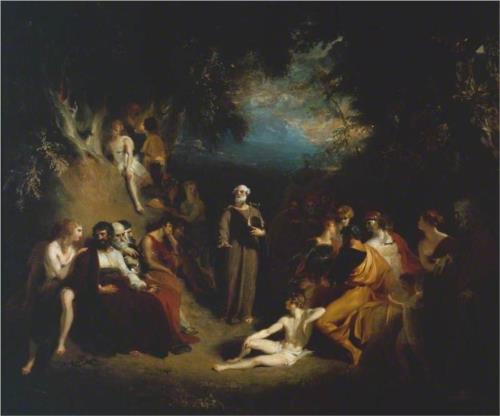
Homero recitando sus poemas
Thomas Lawrence
Reino Unido

Epic

I have lived in important places, times
when great events were decided, who owned
that half a rood of rock, a no-man’s land
surrounded by our pitchfork-armed claims.
I heard the Duffy’s shouting “Damn your soul”
and old McCabe Stripped to the waist, seen
step the Plot defying blue-cast steel-
“Here is the march a long these iron stones”.
That was the year of the Munich bother.
which/ Was more important? I inclined
to lose my faith in Ballyrush and Gortin
till Homer’s ghost came whispering to my mind.
He said: !I made the Iliad from such
a local row”. Gods make their own importance.

Epopeya

He vivido en sitios importantes, en tiempos
en que grandes cuestiones se dirimían, de quién era
aquel octavo de acre pedregoso, una tierra de nadie
rodeada por reclamos defendidos con horquetas.
“Maldita sea tu alma” —escuché gritar a los Duffy—
y vi al viejo McCabe, desnudo hasta la cintura
pisar el terreno desafiando el acero:
“La marca son estas piedras rojizas”.
Ese era el año del asunto de Munich. ¿Cuál era más trascendente?
Me inclinaba a perder la fe en Ballyrush y Gortin
cuando llegó el espectro de Homero, susurrando a mi conciencia.
“Hice la Ilíada de una riña local
como esa”, me dijo. Los dioses crean su propia importancia.

Versión de Jorge Fondebrider y Gerardo Gambolini

Patrick Kavanagh (Irlanda, 1904 – 1967)